

What affects teeth whitening cost in Lynnwood?
Teeth whitening cost in Lynnwood depends first on the method you choose and how your natural teeth respond. At Planet Family Dental, treating dentist Dr. Megha Sheth, D.D.S., helps you compare teeth whitening options around your goals, comfort, timeline, and budget.
There is no single fee that fits every smile. Store-bought products usually have a lower starting cost, while professional care includes an assessment, guidance, and the treatment selected for you.
- Starting shade and stain type: Surface stains and deeper discoloration respond differently. A darker tooth does not automatically need stronger gel.
- Method and sessions: Office treatment, custom trays, and extra sessions involve different materials and staff time.
- What the plan includes: Ask whether trays, gel, follow-up checks, refills, or a planned repeat session are included or separate.
- Care needed first: An exam, cleaning, decay treatment, or help with gum irritation may need to happen before bleaching.
Your cost varies by case. We provide a clear written estimate before treatment begins so you can compare complete plans rather than a single box, tray, or appointment.
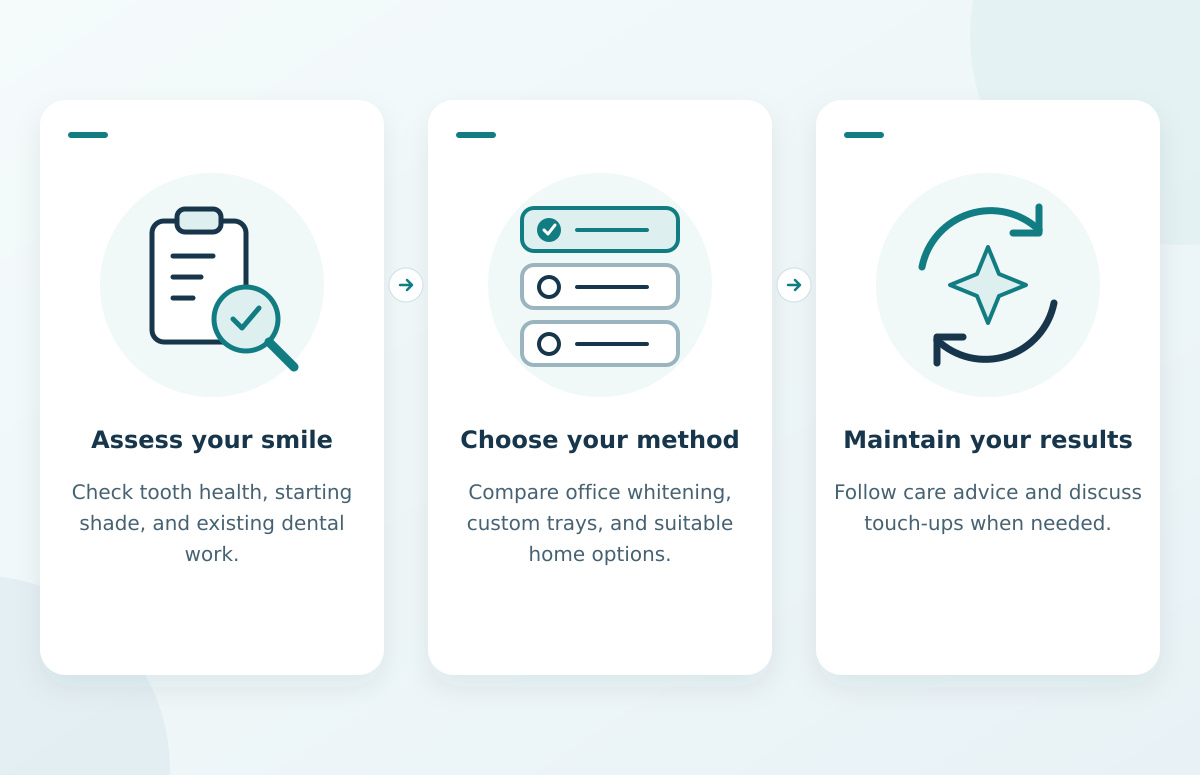
- Assess your smileCheck tooth health, starting shade, and existing dental work.
- Choose your methodCompare office whitening, custom trays, and suitable home options.
- Maintain your resultsFollow care advice and discuss touch-ups when needed.
Professional vs. at-home whitening cost and results
Professional whitening includes both treatment completed in the dental office and dentist-supervised treatment with custom trays at home. Store-bought strips, gels, and whitening toothpastes are separate options. The right choice depends on your oral health, stain type, timeline, desired change, and ability to follow directions consistently.
- In-office whitening: The dental team protects the gums and applies professional whitening material under supervision. It often works faster, although some patients need more than one session.
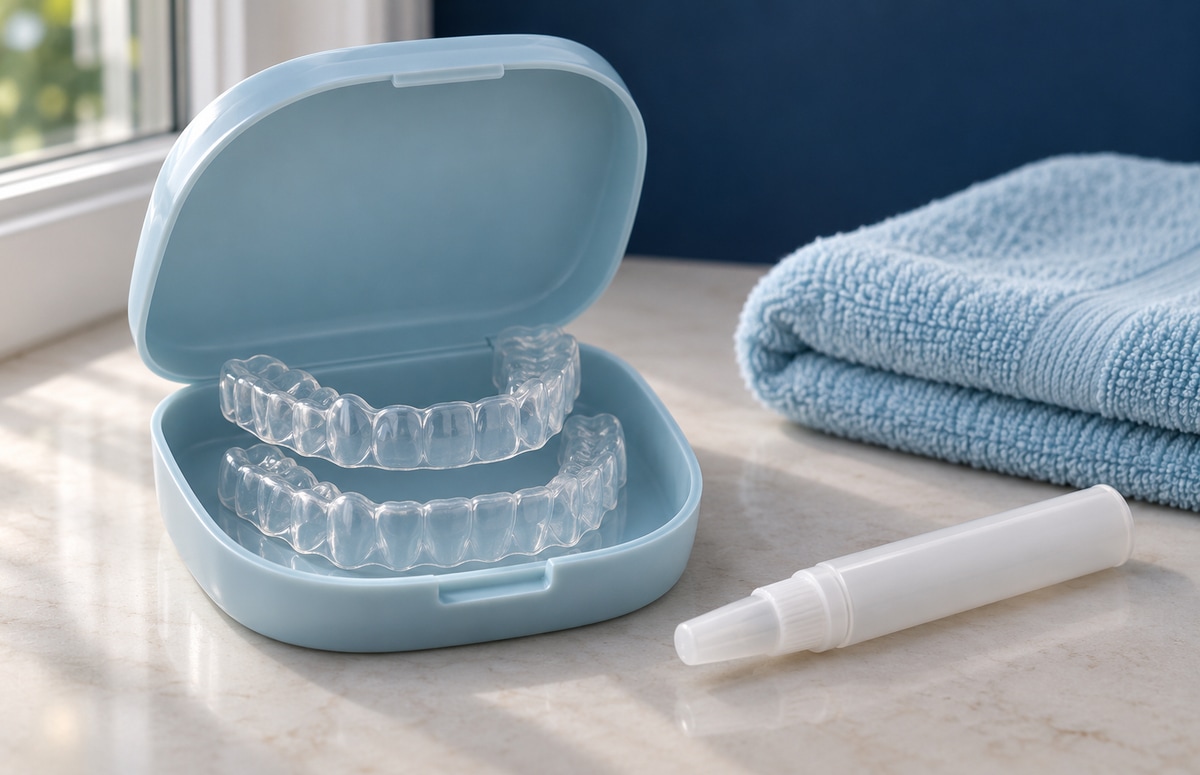
- Custom take-home trays: Trays are made to fit your teeth and hold the prescribed gel. Results build gradually over the schedule recommended by your dentist, and the trays may be useful for future touch-ups if they still fit.
- Store-bought products: Some strips and gels can lighten suitable natural teeth. Fit, strength, and results vary. Whitening toothpaste primarily removes surface stains rather than changing the underlying tooth shade.
A faster method does not guarantee a lighter final shade. Compare the full course, expected follow-up, and likely maintenance rather than choosing from price alone.
| Method | Main cost driver | Speed | Expected result | May fit best for |
|---|---|---|---|---|
| In-office professional whitening | Clinical time, materials, and number of sessions | Often fastest; additional sessions may be needed | Noticeable lightening of responsive natural teeth under supervision | People who prefer treatment handled in the office or have a shorter timeline |
| Custom take-home trays | Custom tray fabrication, professional gel, refills, and follow-up | Gradual, usually over days to weeks | Dentist-guided lightening with consistent use | People who want professional care at home and a reusable touch-up option |
| Store-bought products | Product choice and repeat purchases; usually lower upfront cost | Gradual and product-dependent | Can improve suitable stains; fit and response may be uneven | People with healthy, suitable teeth who can follow product directions |
Know what whitening can and cannot change
Whitening changes the shade of natural tooth enamel. Crowns, porcelain veneers, tooth-colored fillings, and bonding keep the shade of their restorative material. If nearby natural teeth become lighter, older dental work may look darker by comparison. Point out visible restorations during your consultation so the possible color difference is part of the plan.
- Existing dental work: Porcelain veneers, crowns, fillings, and dental bonding do not bleach.
- Deep or unusual discoloration: Some stains respond unevenly or only partly. A tooth that suddenly becomes dark needs an examination rather than repeated whitening.
- Shape and damage: Whitening cannot repair chips, close spaces, or change tooth shape.
- Health concerns: Decay, gum problems, cracks, and unexplained sensitivity should be evaluated before whitening begins.
Healthy dental work does not automatically need replacement because of a color difference. If replacement is being considered, Dr. Sheth can coordinate whitening first, allow the shade to settle, and then discuss matching any future restoration.
A clear plan starts with a conversation.
We'll help you understand your treatment and payment options.
Is teeth whitening covered by insurance?
Teeth whitening is usually considered cosmetic, so dental insurance typically does not cover it. Having an accepted insurance plan does not mean whitening is a covered benefit. Your exam, needed X-rays, cleaning, or treatment for an oral-health problem may have separate coverage under your policy.
Ask the dental team to separate covered care from cosmetic whitening on the written estimate. This helps answer questions such as how much is teeth whitening at the dentist with insurance without making assumptions about your plan. An estimate from an insurer is useful for planning, but it is not a guarantee of payment.
- Confirm what is included: Compare trays, gel, visits, refills, and follow-up rather than only a monthly amount.
- Review financing terms: If financing is available, ask about eligibility, interest, fees, and the total repayment amount.
- Plan the covered visit separately: A medically necessary exam or cleaning is different from cosmetic whitening.
Review our payment options and request a written estimate before deciding. The goal is a clear total and a plan you understand, without surprises.
How we handle whitening at Planet Family Dental
Dr. Megha Sheth begins by checking your oral health, starting shade, visible dental work, sensitivity history, and the change you hope to see. At our Lynnwood practice near Alderwood Mall, we help patients from Edmonds, Mountlake Terrace, Shoreline, and Mill Creek choose an approach that fits their routine and timeline.
A dental exam and cleaning when needed provide a better starting point. Cleaning removes buildup and some surface stain, which may make the smile look brighter even before bleaching. The exam can identify decay, gum irritation, cracks, or sensitivity that could affect comfort or results.
- Assess your smile: Check tooth health, starting shade, stain type, and existing dental work.
- Choose your method: Compare in-office whitening, custom trays, and suitable store-bought options.
- Set expectations: Discuss what may change, what will not, and whether more than one session may be needed.
- Review the estimate: Confirm what the plan includes before treatment starts.
Tell us about previous whitening products, tooth sensitivity, and any upcoming event. Bringing the product name or a photo can help Dr. Sheth understand what you have already tried.
How long does teeth whitening last?
Whitening results gradually fade. There is no fixed lifespan because the starting shade, treatment method, daily habits, and maintenance routine differ for every person. Many patients notice their smile stays brighter for months or longer, but no method can promise a permanent shade.
- Staining habits: Coffee, tea, red wine, dark sauces, and tobacco can add new stain more quickly.
- Daily care: Brush with fluoride toothpaste, clean between the teeth, and follow the cleaning schedule recommended for your oral health.
- Touch-ups: Ask when another course is appropriate. If you have custom trays, confirm that they still fit before buying or using more gel.
- Realistic maintenance: Avoid chasing a permanently white shade. Natural tooth color and individual response set practical limits.
Custom trays can make dentist-directed maintenance convenient, but use only the amount and wear time provided with your gel. More product or longer wear does not guarantee a better result and can increase sensitivity or gum irritation.
How to manage sensitivity and whiten safely
Temporary tooth sensitivity or gum irritation can happen with professional or store-bought whitening. The likelihood and intensity vary, so tell Dr. Sheth if your teeth are already sensitive, if you have had discomfort with a previous product, or if cold foods and drinks regularly bother you.
- Follow the exact directions: Use the recommended amount and schedule. Do not assume stronger gel, extra product, or longer wear is better.
- Pause when needed: Stop whitening and contact the dental office if discomfort is severe, persistent, or unusual.
- Protect the gums: Custom trays and supervised office techniques help control where gel contacts the mouth, but irritation is still possible.
- Avoid household mixtures: Acidic or abrasive home remedies can damage enamel or irritate soft tissues without producing predictable whitening.
- Do not combine products: Layering several whitening products can increase exposure and sensitivity.
The most useful plan is not simply the strongest one. It is the option you can use safely and consistently, with expectations that match your teeth and your goals.
A FEW MORE ANSWERS
Questions on your mind?
A little more information to help you feel prepared.