

What affects root canal cost in Lynnwood?
Root canal cost in Lynnwood, WA varies by case, so an online average cannot tell you what your tooth needs. The full estimate should account for treatment inside the tooth and the work needed to protect it afterward.
At Planet Family Dental near Alderwood Mall, treating dentist Dr. Megha Sheth, D.D.S., evaluates your tooth and explains the findings. These factors help shape your plan:
- Which tooth: Front teeth often have simpler canal systems. Premolars vary, while molars usually have more canals and can take more time to treat.
- Previous treatment: Retreatment involves reopening a previously treated tooth and removing old canal filling material. Narrow, curved, or blocked canals can add difficulty.
- Imaging and infection: X-rays help assess the roots and surrounding bone. An abscess or an unclear diagnosis may require additional evaluation or care.
Ask what each estimate includes. We provide a clear written estimate before treatment begins, based on the findings from your examination.
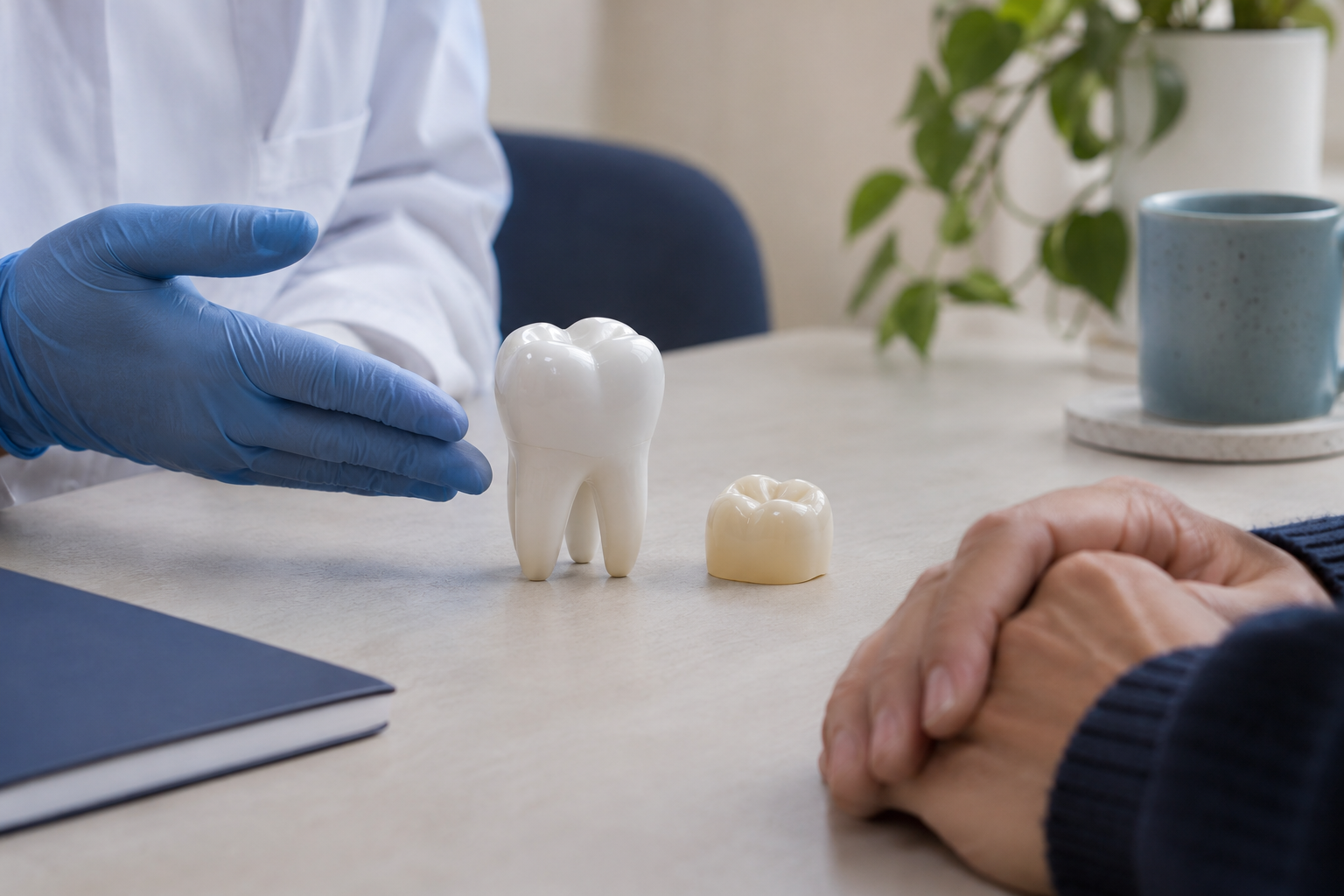
Why a root canal and crown belong in the same estimate
A root canal removes damaged or infected pulp from inside a tooth, but it does not replace missing outer tooth structure. The final restoration seals the opening and helps the tooth handle normal use.
A crown is usually needed afterward for molars and premolars because they bear chewing forces. Some front teeth can be restored with a filling when enough healthy structure remains.
- Root canal treatment: The canals are cleaned, shaped, filled, and sealed. This addresses the problem inside the tooth.
- Foundation: A buildup may be needed to replace lost tooth structure and support a crown. Ask whether this is part of your plan.
- Final protection: The choice of restoration depends on the tooth's location, remaining structure, cracks, and bite. A temporary filling is not the finished result.
Review the expected timing and separate treatment items together. Our dental crowns page explains the role of a crown in protecting a damaged tooth.

Insurance and payment options for Lynnwood patients
Most major PPO plans are accepted at Planet Family Dental, but accepting insurance does not automatically mean we are in your plan's network. Check your specific network status and benefits before deciding what you will owe.
For uninsured patients, a membership plan and payment plans are available to discuss. Review eligibility and terms alongside your written estimate before approving care.
- Separate benefits: Root canal treatment, a buildup, and a crown may fall under different coverage rules. Ask about each planned service.
- Plan limits: Your deductible, remaining annual benefit, waiting periods, and exclusions can affect your share. Coverage for a previous root canal may differ from first-time treatment.
- Payment terms: Compare the membership fee with eligible savings. For financing, review interest, fees, repayment terms, and any approval requirements.
Visit our payment information page to explore arrangements. We review the written estimate first; an insurance estimate remains subject to the insurer's final claim decision.
Check your network status and benefits for each planned service.
An option for uninsured patients; confirm eligible services and savings.
Discuss available arrangements and review the full repayment terms.
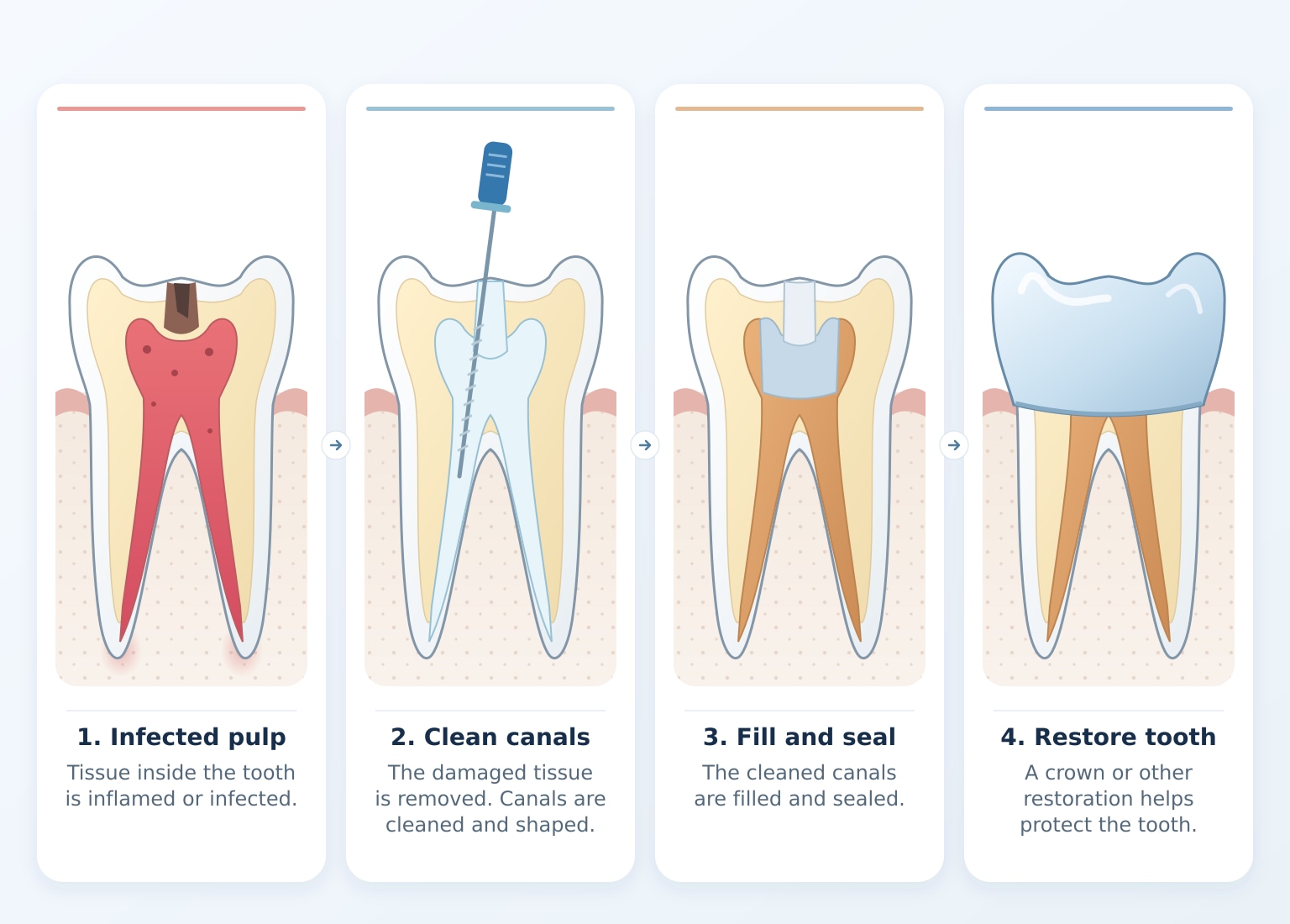
- Infected pulpTissue inside the tooth is inflamed or infected.
- Clean canalsThe damaged tissue is removed and the canals are cleaned and shaped.
- Fill and sealThe cleaned canals are filled and sealed.
- Restore toothA crown or other restoration helps protect the tooth.
A clear plan starts with a conversation.
We'll help you understand your treatment and payment options.
How we handle root canal care at Planet Family Dental
Dr. Megha Sheth starts with an examination, your symptoms, and appropriate X-rays to determine whether a root canal is needed. She also checks whether the tooth can be restored reliably after treatment.
Our approach connects the diagnosis, treatment, and final restoration so you understand the whole plan. We explain what can be treated here and when specialist care is appropriate.
- Confirm the cause: Testing helps distinguish a pulp problem from other causes of tooth pain. A toothache alone does not prove you need a root canal.
- Discuss comfort: Local anesthesia numbs the area. If sedation is being considered, ask about availability, suitability, and any separate charges before proceeding.
- Match care to complexity: Difficult canal anatomy or complex retreatment may warrant referral to an endodontist, a root canal specialist.
Our root canal service includes planning for the next steps. Patients traveling from Edmonds or Mountlake Terrace can ask about visits needed for both treatment and restoration.
Should you save the tooth or choose extraction?
A root canal can preserve a natural tooth when there is enough healthy structure and support for a lasting restoration. Extraction may be appropriate when a tooth has an untreatable fracture, extensive damage, or poor support from the gums and bone.
Compare the complete care plan, including what happens after the painful tooth is treated. An extraction estimate alone does not include every possible replacement step.
- Chance of success: Ask whether the tooth can be sealed and restored, and what could limit its long-term outlook.
- Daily function: Consider chewing, appearance, and whether a missing tooth would need replacement. Not every gap has the same effect.
- Future care: Compare the visits, healing, maintenance, and restoration involved with each suitable option.
Read about tooth extraction when removal is being considered. If an implant is part of the replacement discussion, implant placement is handled through referral. Your dentist can explain the alternatives without assuming the lowest initial expense is the best fit.
| Option | What to include in the estimate | Main consideration |
|---|---|---|
| Root canal and restoration | Canal treatment, any buildup, and the final filling or crown | Whether the natural tooth can be restored predictably |
| Extraction and any planned replacement | Removal, follow-up, and replacement care if appropriate | Healing, function, and future treatment needs |
When to seek care and what recovery involves
Persistent tooth pain, pain when biting, swelling, or drainage from the gums should be assessed promptly. These signs can have several causes, so an examination is needed before choosing treatment.
Pain easing does not always mean an infection has healed. An infected tooth with dead pulp may still need treatment even when it no longer reacts to cold.
- Before treatment: Tell the team about swelling, fever, recent changes, and any medicines you take. Antibiotics alone do not remove the source of an infection inside a tooth.
- After treatment: Some tenderness can occur for a few days. Follow your dentist's instructions and report worsening pain, new swelling, or a bite that feels uneven.
- Protect the tooth: Wait until numbness wears off before eating. Avoid chewing on the treated tooth until the final restoration is completed and your dentist clears it.
Contact our emergency dental team for urgent dental symptoms. Tell us about symptoms when arranging your visit so we can advise on the appropriate next step.
A FEW MORE ANSWERS
Questions on your mind?
A little more information to help you feel prepared.