

Root canal vs extraction: which choice makes sense?
Root canal vs extraction comes down to whether your tooth can be restored and remain useful. In Lynnwood, WA, treating dentist Dr. Megha Sheth, D.D.S., evaluates the damage, roots, and gum support before recommending either option.
When the pulp inside a tooth is infected or cannot heal, saving a restorable tooth with a root canal is often the better long-term choice. Back teeth usually need a crown afterward to protect them during chewing.
- Consider saving it: Enough healthy tooth remains for a lasting restoration, and the roots and surrounding bone provide adequate support.
- Consider extraction: A deep fracture, too little remaining tooth, or advanced gum disease with major bone loss makes restoration unrealistic.
Pain alone cannot tell you which path is best. The final choice follows an exam and X-rays, with your goals and preferences included.
The damaged pulp can be treated, enough sound tooth remains, and gum and bone support are adequate.
The tooth has a fracture too deep to restore, severe structural loss, or inadequate support from advanced gum disease.
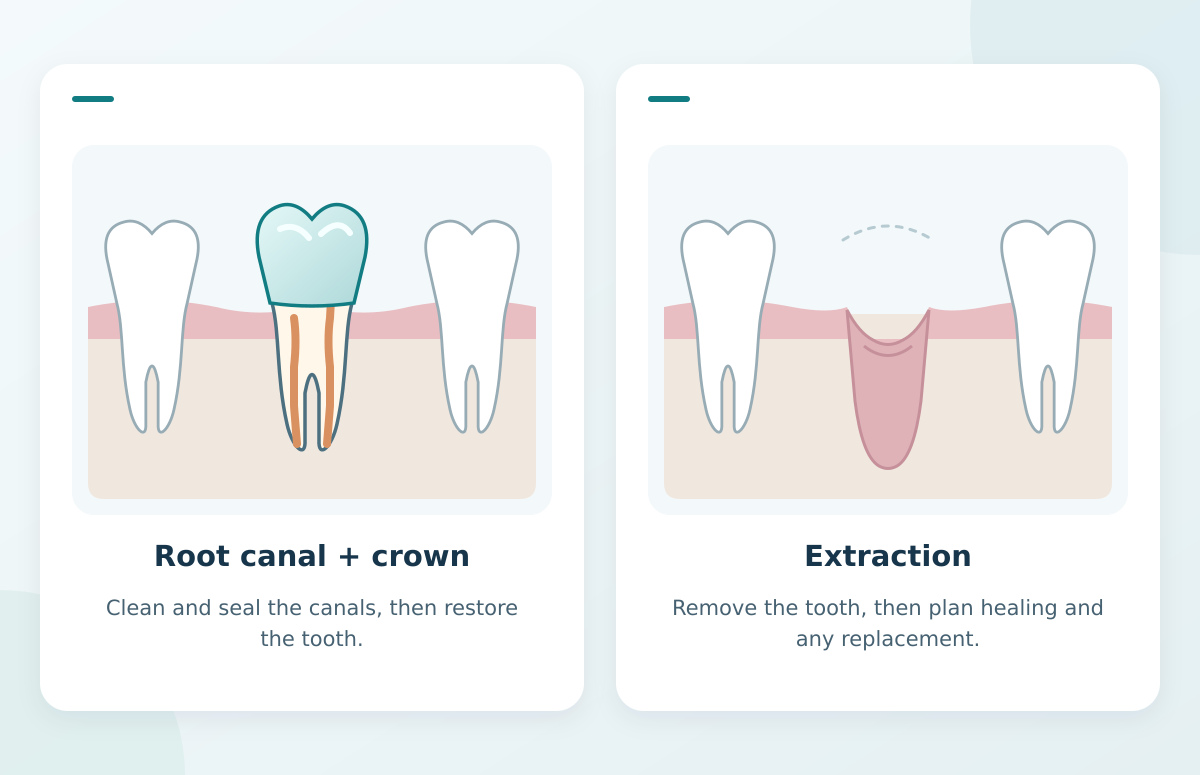
- Root canal + crownClean and seal the canals, then restore the tooth.
- ExtractionRemove the tooth, then plan healing and any replacement.
What each treatment involves
With root canal treatment, the dentist removes damaged pulp, cleans and disinfects the canals, then fills and seals them. The tooth stays in place, but it still needs a secure final restoration.
- Root canal and restoration: Treatment may take one or more visits. A dental crown is usually recommended for back teeth; some front teeth can be restored with a filling.
- Extraction and healing: Tooth extraction removes the tooth from its socket. A damaged or difficult-to-reach tooth may need a surgical approach.
- Follow-through: Finish the recommended restoration after a root canal, or review healing and replacement plans after removal.
Ask about the complete schedule, not just the first appointment. Neither option guarantees a problem-free future; your diagnosis, the final restoration, and ongoing care all matter.
| What to compare | Root canal + crown | Extraction |
|---|---|---|
| What's involved | Clean and seal the canals, then restore and protect the tooth | Remove the tooth; plan socket healing and any replacement |
| Visits | Root canal visits plus crown treatment; schedule varies | Removal visit, any follow-up, and separate replacement visits |
| Recovery | Temporary tenderness; protect the tooth until fully restored | Socket care; soreness and swelling vary with complexity |
| Keeps the natural tooth | Yes, if treatment and restoration are suitable | No; removal is permanent |
| Later replacement needed | Not while the restored tooth remains healthy and functional | Often considered for chewing teeth; wisdom teeth usually need none |

Compare total costs and the effect of a missing tooth
Extraction usually costs less upfront than a root canal and crown. However, the full comparison includes whether you will replace the tooth. Costs vary by case; request a clear written estimate for each suitable plan before treatment.
- Saving the tooth: Include the root canal, any buildup, and the final restoration. Tooth complexity and specialist care can affect the total.
- Replacing a gap: A dental bridge or partial denture adds treatment and maintenance. Implant evaluation and placement are arranged by referral when appropriate.
- Leaving a gap: Nearby teeth may shift, chewing may change, and bone can shrink at the extraction site. Replacement needs depend on the tooth and your bite.
We accept most PPO plans and offer a membership option for uninsured patients and payment plans. Review payment options, confirm benefits and terms, and compare the complete estimated patient share.
A clear plan starts with a conversation.
We'll help you understand your treatment and payment options.
Pain and recovery: what to expect
Both procedures use local anesthesia to numb the area. You may feel pressure, but tell the dentist if you feel sharp pain so the plan can be adjusted. Neither treatment should be chosen based on a promise of painless recovery.
- After a root canal: The tooth may feel tender for several days. Avoid hard chewing on it until the final restoration is complete.
- After extraction: Soreness and swelling depend on the difficulty of removal. Comfort often improves over several days, while socket healing takes longer.
- Protect the clot: Follow instructions about gauze, gentle cleaning, soft foods, and avoiding smoking, straws, and forceful rinsing. Losing the clot can cause painful dry socket.
Ask for a pain-relief plan that fits your medical history. Call if pain worsens instead of improving, swelling increases, or bleeding will not stop with the advised pressure.
How we handle this at Planet Family Dental in Lynnwood
Dr. Megha Sheth performs root canals in-house, including molars, and most extractions in-house. When complex canals, fractures, surgical difficulty, or medical needs make specialist care the better choice, she recommends an appropriate referral.
Our office near Alderwood Mall serves patients from Edmonds and Mountlake Terrace. We discuss the findings in plain language so you understand why a tooth may or may not be worth saving.
- Examine and image: Check the tooth, gums, bite, and X-rays. Additional tests may be needed because some cracks are hard to see.
- Compare options: Review likely benefits, limitations, healing, replacement needs, and the written estimate.
- Choose the next step: Agree on treatment, needed referrals, and follow-up before proceeding.
For severe pain, call about a same-day visit; the team will confirm availability and prioritize urgent needs.
Why waiting matters—and when wisdom teeth are different
Waiting can let decay, cracks, or infection progress. Less healthy tooth may remain for restoration, and further damage can make removal more involved. A toothache that fades does not prove the underlying problem has healed.
- Treat the cause: Antibiotics may be needed for some infections, but they do not replace treatment of the infected tooth.
- Know the wisdom-tooth exception: An impacted, repeatedly infected, or badly damaged wisdom tooth is often removed instead of restored. It usually does not need replacement.
- Avoid automatic removal: Healthy, functional wisdom teeth may be monitored. An exam determines whether keeping one makes sense.
Facial swelling or fever with a tooth problem needs urgent same-day assessment. Contact a dentist promptly; seek urgent medical care if dental care is unavailable or you feel increasingly unwell.
A FEW MORE ANSWERS
Questions on your mind?
A little more information to help you feel prepared.