

Tooth pain at night in Lynnwood: start here
Tooth pain at night that keeps you awake usually means you need a dentist soon. Home steps may ease discomfort until then, but they cannot repair decay, seal a crack, or treat the source of an infection.
Dr. Megha Sheth, D.D.S., your treating dentist at Planet Family Dental in Lynnwood, WA, can assess the cause and discuss toothache relief. First, decide how urgently you need help.
- Check for changes: Notice swelling, fever, a bad taste, or difficulty opening your mouth, swallowing, or breathing.
- If symptoms are stable: Try the temporary measures below and arrange a prompt dental visit.
- If pain remains severe: Seek urgent dental advice tonight if safe, label-directed pain relief does not help. Do not simply keep taking more medicine.
A dental emergency and a medical emergency are not always the same. A dentist usually treats the tooth itself; an emergency department assesses dangerous swelling or other serious symptoms. If you cannot reach a dentist and the pain is unbearable or you feel very unwell, seek urgent medical assessment.
| Symptom | How soon to get help |
|---|---|
| Mild ache without swelling or fever | Book a dental visit soon; seek earlier advice if symptoms worsen. |
| Pain waking you, manageable with temporary care and no warning signs | Call next morning for a same-day visit; availability is confirmed by the team. |
| Facial swelling or fever with tooth pain | Same-day urgent assessment. If present tonight, seek urgent help tonight. |
| Swelling spreading toward the eye or neck, or trouble breathing or swallowing | ER now; call 911 for breathing difficulty or if safe transport is unavailable. |
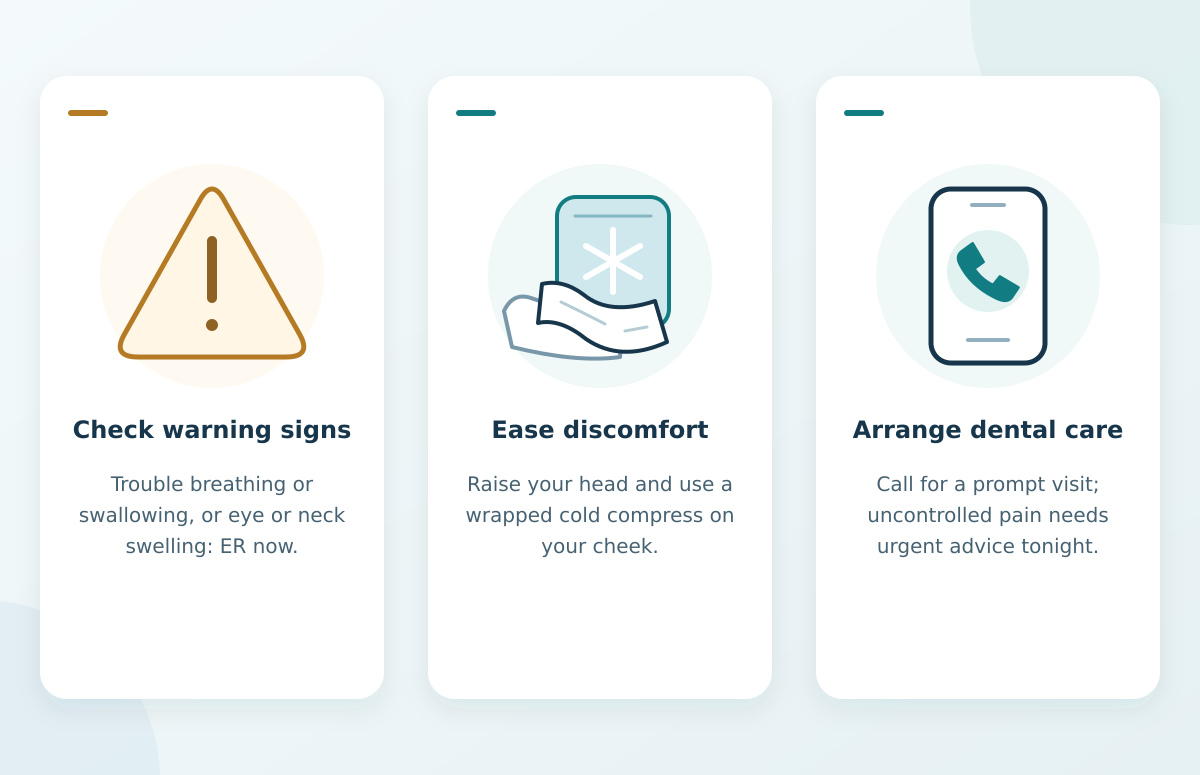
- Check warning signsTrouble breathing or swallowing, or eye or neck swelling: ER now.
- Ease discomfortRaise your head and use a wrapped cold compress on your cheek.
- Arrange dental careCall for a prompt visit; uncontrolled pain needs urgent advice tonight.
Safe steps to try tonight
If you have no emergency warning signs, these temporary steps for adults may help while you arrange care. Choose gentle measures and stop anything that makes the pain worse.
- Raise your head: Rest with your head above your chest using supportive pillows. Avoid lying completely flat if that increases throbbing.
- Use cold, not heat: Hold a cloth-wrapped cold compress against the outside of your cheek briefly, taking breaks. Never put ice directly on skin.
- Rinse gently: Warm salt water may soothe irritated tissues. Spit it out; do not swallow it or use very hot water.
- Remove trapped food: Gently floss if food is caught between teeth. Do not force floss, poke the gum, or keep working at a painful area.
- Avoid triggers: Choose soft foods, avoid very hot, cold, or sweet items, and chew away from the sore tooth.
After recent dental surgery, follow your dentist's instructions before rinsing or cleaning the surgical area.
Continue gentle brushing with a soft toothbrush, without scrubbing the sore gum. A salt-water rinse may help clean the area, but it cannot reach an infection inside a tooth. Keep the compress wrapped and remove it before falling asleep. If cleaning or rinsing increases pain, stop and ask for advice.
A raised head, wrapped cold compress, gentle cleaning, and a plan for dental care.
Heat, aspirin on the gums, leftover antibiotics, and trying to drain swelling yourself. Do not sleep with an ice pack on your face.

Why it may feel worse lying down
Lying flat may increase blood flow and pressure in the head, making an already irritated tooth feel more throbbing. Fewer distractions at bedtime can also make pain harder to ignore. These are possible explanations, not a diagnosis.
- Deep decay: A cavity can irritate the soft tissue inside the tooth, causing lingering or spontaneous pain.
- A cracked tooth: A crack may cause pain when biting or when the tooth meets hot or cold foods.
- Infection or abscess: Throbbing, swelling, or a bad taste may signal infection. Fever adds urgency.
- Gum problems: Inflamed gums or trapped food can cause soreness that feels like tooth pain.
- Wisdom teeth: Gum tissue around a partly erupted tooth may become inflamed or infected.
Symptoms overlap. Even if sitting up helps, or the pain fades, the tooth may still need treatment.
Jaw clenching can also make teeth or nearby muscles sore, and sinus problems can sometimes feel like pain in upper teeth. Tell the dentist if several teeth seem involved or if you have jaw soreness or congestion. Do not assume those symptoms rule out a dental problem.
A clear plan starts with a conversation.
We'll help you understand your treatment and payment options.
Use pain medicine carefully
Over-the-counter pain relievers can offer temporary relief, but the right choice depends on your health. Common options include ibuprofen or acetaminophen. Use a product only as directed on its label and only if it is safe for you.
- Check your health history: Ask before use if you have kidney or liver disease, stomach ulcers or bleeding, heart disease, medicine allergies, or take blood thinners.
- Read every ingredient: Cold, flu, and pain products may contain the same active ingredient. Avoid accidentally taking extra.
- Ask a pharmacist: Get advice if you are pregnant, choosing medicine for a child, taking other medicines, or unsure about the warnings.
Do not put aspirin against the tooth or gums; it can burn tissue. Do not use leftover antibiotics. If pain remains severe despite safe use, seek urgent assessment rather than exceeding the label.
Different pain relievers have different risks. Ibuprofen can increase stomach bleeding risk and may be unsuitable with kidney problems or certain medicines. Too much acetaminophen can harm the liver. Keep a written record of the product and when you took it, and show the packaging to a pharmacist if anything is unclear.
What a dentist does to treat the cause
A dental visit starts with questions about the pain, an exam, and X-rays when needed. The dentist checks the tooth, gums, bite, and response to testing. The goal is to find the cause before choosing treatment.
- Decay or a damaged filling: A filling or other restoration may repair the tooth when the inner tissue can recover.
- Inflamed or infected pulp: Root canal treatment may save a tooth that can be restored.
- An abscess: Abscess treatment may involve drainage and treatment of the source. Antibiotics are sometimes needed, but do not replace dental care.
- A tooth that cannot be saved: Extraction may be recommended after assessment.
An urgent visit may begin with pain management and a treatment plan. Completing treatment or arranging specialist care can require another appointment.
Tooth pain alone does not automatically mean you need antibiotics, a root canal, or an extraction. The recommendation depends on what the examination shows. Before leaving, ask what has been treated, whether anything is temporary, when further care is due, and which symptoms should prompt an earlier call.
How we handle urgent tooth pain in Lynnwood
Dr. Megha Sheth offers same-day visits for severe pain at Planet Family Dental; our team confirms availability when you contact us. Our office near Alderwood Mall serves patients from Edmonds and Mountlake Terrace.
When you request emergency dental care, explain that the pain is affecting your sleep. Mention any swelling or fever so the team can help prioritize your needs.
- Describe the pain: Tell us when it started, what triggers it, and whether it is getting worse.
- Bring your medicine list: Include allergies and anything taken for pain, with when you last took it.
- Discuss payment: We accept most PPO plans and offer a membership option and payment plans. Review payment options and ask about current terms.
Costs vary by the care needed. We provide a clear written estimate before treatment begins.
Ask whether the estimate covers only the urgent examination or also the treatment discussed. Insurance acceptance does not guarantee that every service is covered, and membership benefits and financing terms vary. If treatment needs more than one visit, ask the team to explain the order of care and what each visit involves.
A FEW MORE ANSWERS
Questions on your mind?
A little more information to help you feel prepared.