

Cracked vs chipped tooth: the difference for Lynnwood patients
The main difference in a cracked vs chipped tooth is a missing piece versus a fracture line. A small chip often affects only the hard outer enamel and may be mainly cosmetic. A crack can run deeper, stay hidden, and cause sharp pain when biting or releasing a bite, or sensitivity to cold.
Dr. Megha Sheth, D.D.S., evaluates chipped and cracked teeth at Planet Family Dental in Lynnwood, WA, near Alderwood Mall. Both deserve a dental check because appearance alone cannot show the full damage.
- A chip can be deeper than it looks: A large missing piece may expose sensitive layers or the soft center of the tooth. Pain, bleeding from the break, or a pink or red center needs prompt attention.
- A crack may be hard to find: Symptoms can come and go, and some cracks cause no pain. Do not repeatedly bite on the tooth to test it.
- Cracks do not mend themselves: A structural crack does not heal like a broken bone and can spread. Earlier assessment can help preserve treatment options.
A whole permanent tooth knocked out of its socket is different from a chip. Seek emergency dental care immediately.
A visible piece is missing, leaving a rough or uneven edge. A small chip may not hurt, but a deeper break can be painful.
Sharp pain with biting or release, or cold sensitivity, may occur without an obvious missing piece. These clues need an examination; they do not confirm a diagnosis.
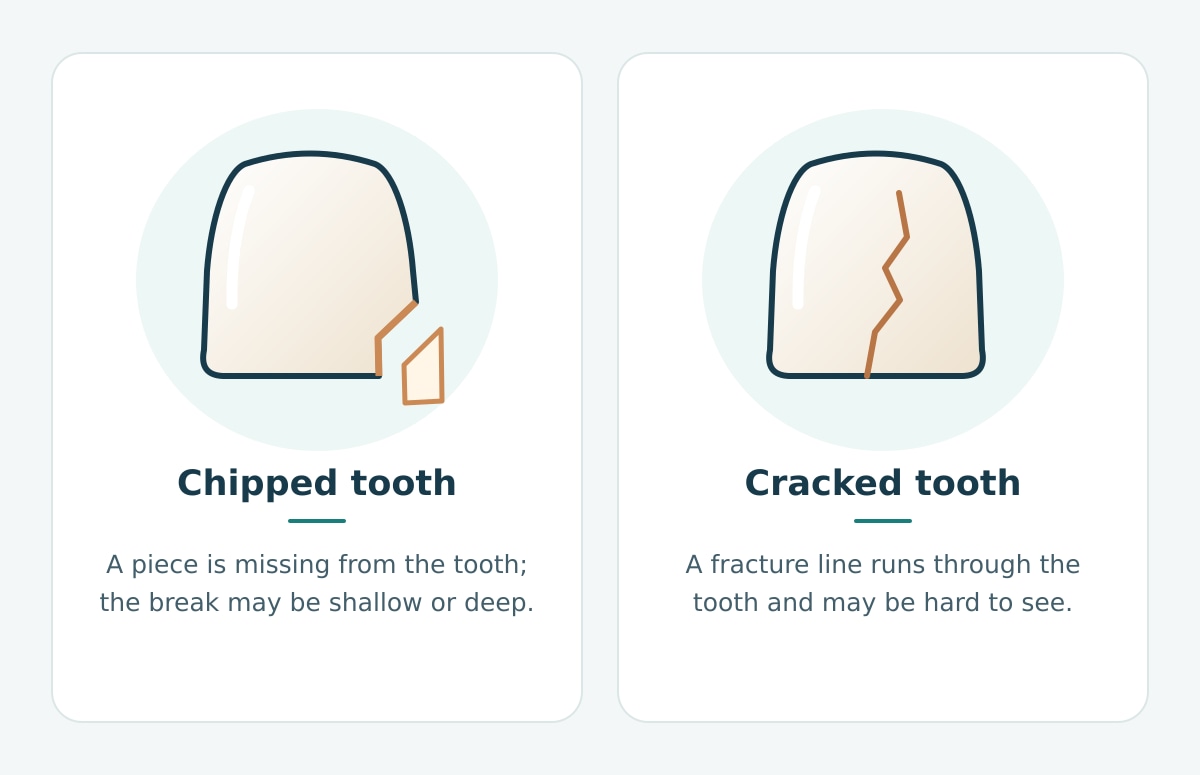
- Chipped toothA piece is missing from the tooth; the break may be shallow or deep.
- Cracked toothA fracture line runs through the tooth and may be hard to see.
What to do right now
Protect the tooth while you arrange advice. Home care can reduce irritation, but it cannot seal a deep crack or replace a proper repair. These steps are for a chipped or cracked tooth that remains in your mouth.
- Rinse gently: Use warm, not hot, water to clear loose debris. Continue careful brushing without pushing into the broken area.
- Save the fragment: Put any broken piece in a clean container with milk or your own saliva and bring it. The dentist may be able to reattach it, but this is not always possible.
- Cover a small sharp edge: Dental wax can protect your cheek or tongue. Sugar-free gum can be a brief backup for an adult who can safely manage it. Do not chew it on the damaged tooth or pack it into a deep opening; remove loose material before eating or sleeping.
- Limit swelling and pressure: Use a cold compress wrapped in cloth on the cheek, with breaks. Chew on the other side and avoid hard, sticky, very hot, or cold foods.
- Use medicine carefully: Take over-the-counter pain relief only as the label directs and if safe with your health conditions and medicines. Ask a pharmacist when unsure.
Do not file the tooth, use superglue, or place aspirin directly against it. Leave any still-attached fragment alone rather than pulling it away.

How quickly should you be seen?
Call a dentist after a tooth injury, even if it seems small. Describe the break and your symptoms so the team can judge the timing. The table is a guide, not a promise that waiting is safe.
- Brief sensitivity: A quick cold sensation is different from pain that lingers after the drink is gone. Report how long it lasts and whether it happens without a trigger.
- Biting pain: Pain on chewing or releasing pressure can suggest a crack, but other problems can feel similar. Avoid chewing on that tooth and request prompt assessment.
- Deep damage: A large break, a pink or red center, bleeding from the tooth, or swelling needs same-day dental attention. Fever or worsening swelling also needs urgent assessment.
- More than a tooth injury: A serious blow, facial numbness after injury, an abnormal bite, or concern about a broken jaw needs immediate medical assessment.
Go to an emergency department for suspected serious head injury, especially with loss of consciousness, vomiting, confusion, or double vision. Heavy bleeding that will not stop, or swelling that affects breathing or swallowing, also needs emergency care. Call emergency services for breathing difficulty or loss of consciousness.
| What you notice | How soon to be seen |
|---|---|
| Small chip with no pain or other warning signs | Call and book soon; the dental team can confirm timing. |
| Sharp edge or brief cold sensitivity | Usually within a few days after advice; sooner if the edge cuts tissue or symptoms worsen. |
| Pain when biting or pain that lingers | Call today for a next-day visit or sooner; severe or uncontrolled pain needs same-day urgent care. |
| Large break, visible pink or red center, bleeding from the break, or swelling | Same-day dental assessment; heavy uncontrolled bleeding or airway symptoms needs emergency medical care. |
| A whole permanent tooth knocked out | Emergency dental care now, ideally within half an hour; aim for within an hour. |
| Serious jaw or facial injury, new numbness after injury, or suspected serious head injury | Emergency medical assessment now. |
A clear plan starts with a conversation.
We'll help you understand your treatment and payment options.
From a minor chip to a split tooth
The name of the injury helps describe its shape, but the location and depth guide treatment. A tiny surface line is different from a fracture running through the tooth. The dentist checks both the missing area and the tooth that remains.
- Minor chip: A small piece of enamel breaks away, often from a front edge. Smoothing or bonding may restore the shape if the damage is shallow.
- Larger chip or broken cusp: Part of the raised chewing surface breaks off, sometimes beside a filling. The tooth may need a stronger repair to support the remaining walls.
- Cracked tooth: A fracture runs into the tooth without fully separating it. Depending on its depth, the tooth may be treatable with protective coverage and sometimes root canal care.
- Split tooth: A complete fracture creates separate sections. The whole tooth usually cannot be saved intact, though a specialist may sometimes preserve a suitable portion.
- Root involvement: A deep crack below the gumline or a vertical root fracture often makes the tooth impossible to restore. Other traumatic root fractures are different; the dentist must identify the pattern.
Shallow enamel lines, called craze lines, often need no treatment beyond monitoring. Do not assume every line is harmless or every cracked tooth must be removed.
How a dentist repairs a chipped or cracked tooth
An exam checks the tooth, gums, bite, and response to testing. X-rays help show decay, root problems, or bone changes, but fine cracks may not appear. The dentist may use light and magnification or recommend a specialist when the diagnosis is uncertain.
- Small front-tooth chips: Careful polishing can smooth a tiny rough spot. Dental bonding adds tooth-colored resin to replace a missing edge; a suitable saved fragment may also be reattached.
- Moderate damage: A filling may repair a limited defect. Inlays and onlays restore selected areas; an onlay can cover weakened chewing points. Not every repair provides the same protection against further cracking.
- A weakened tooth: A dental crown can cover and support a tooth that remains restorable. It reduces movement but cannot make the original crack heal.
- Damaged inner tissue: Root canal treatment may be needed if the pulp, containing nerves and blood vessels, is irreversibly inflamed or infected.
- A tooth that cannot be restored: Extraction may be needed for a deep split or fractured root. The dentist explains the findings and alternatives before treatment.
Some repairs need follow-up visits. Ask what is temporary, when normal chewing can resume, and which symptoms should prompt another call.
How we handle tooth damage at Planet Family Dental in Lynnwood
Dr. Megha Sheth starts by finding the cause of the damage and checking whether the tooth can be preserved. Our Lynnwood office also welcomes patients from Edmonds and Mountlake Terrace. Tell the team when the injury happened and whether pain or swelling is changing.
Dr. Sheth offers same-day visits for severe pain, with availability confirmed by the team. Our emergency dental care page explains the urgent problems we assess.
- Clear decisions: We discuss the repair choices and provide a written estimate before treatment. Needs vary by case, including whether the tooth needs a small repair, protective coverage, or further care.
- Payment options: Most PPO plans are accepted, and a membership option and payment plans are available. Visit payment options and ask us to confirm your coverage, benefits, and plan terms.
- Protection afterward: If grinding contributes to damage, ask about a night guard. A guard can reduce stress on teeth but does not repair an existing crack.
Avoid chewing ice or using teeth to open packages, and wear an appropriate sports mouthguard for contact activities. Keep recommended follow-up visits so the dentist can check the repair and investigate new symptoms.
A FEW MORE ANSWERS
Questions on your mind?
A little more information to help you feel prepared.